Building Underdeveloped Sensorimotor Systems – Training from Sarah Lloyd.
Sarah began developing the BUSS model having noticed certain similarities between traumatised children who were being referred to her and for whom ‘normal’ therapies just weren’t working. Looking for the common factors in these children she noticed a lack of bodily integration – that they hadn’t got a concept of their own bodies in space.
You and I probably take it for granted that we can stop for a moment and become aware of how fast our heart is beating or how comfortable we feel with the temperature in the room. The children Sarah was working with had no sense of that – to such an extent that it showed in the pictures they drew of themselves.
But the issue here wasn’t that these children had broken systems which needed to be managed, but rather that they were underdeveloped systems that needed to be set in motion – like an intricate arrangement of dominoes all set up in an amazing pattern remaining upright because the first domino had never been knocked over. In this case by the right early care.
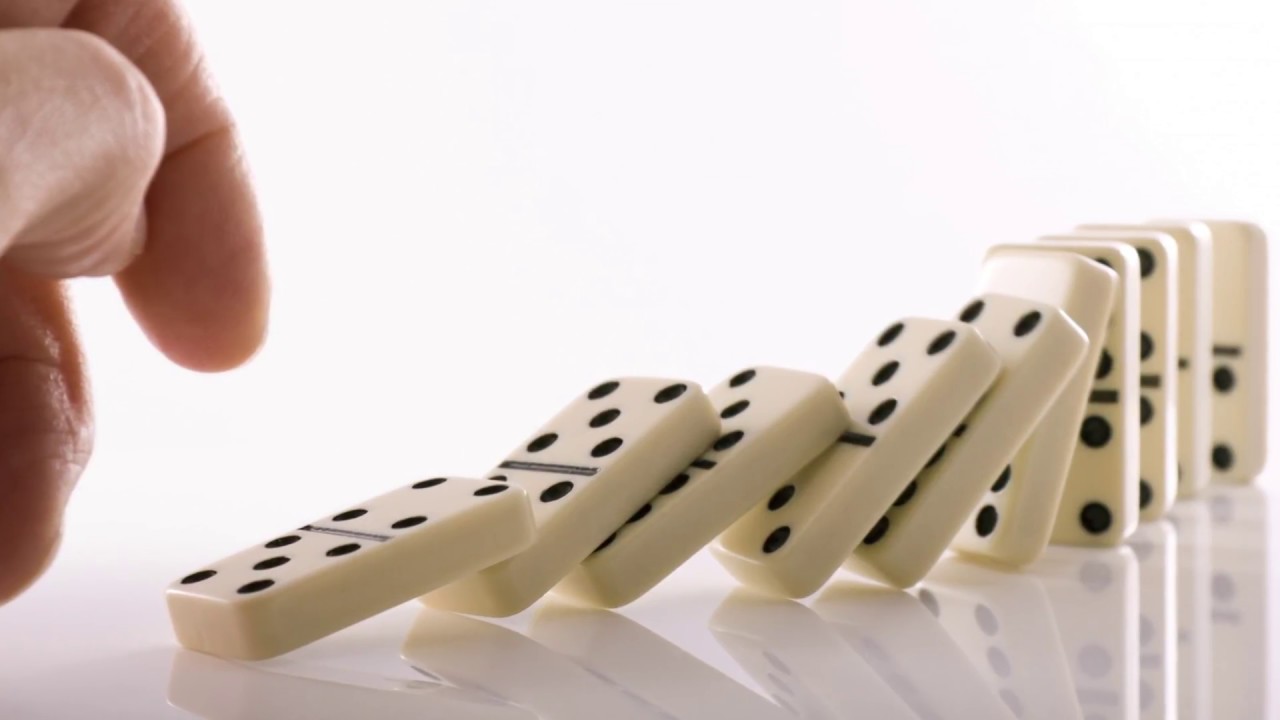
The therapy needed, therefore, is therapy to set those dominoes falling – and the great news is that because the system isn’t broken this can be done very effectively and with relatively swift results.
It was amazing to look into the way that good enough parenting develops a child’s awareness of their body and movement – from the vital movement that happens in the womb (movement which is reduced by drugs, alcohol and high stress) to the rhythms within time just spent gazing at Mum – reaching out to Mum’s face, legs kicking and maybe then going still as they get a bit overwhelmed by a loud noise or a raspberry being blown on their tummy, and then relaxing into movement again as their attuned parent calms them with a soothing voice. I had never thought before about any sort of link between good relationship, developing movement and a sense of ones own body. Without a present, interested, safe care giver babies will remain largely still – their only option out of the fight, flight or freeze trio. Even for a child removed at birth into a caring foster home there may have been restricted movement in utero; followed by time in special care; followed by a life full of meetings and contact arrangements etc – all of which are not conducive to normal bonding, attunement and developing at the baby’s pace.
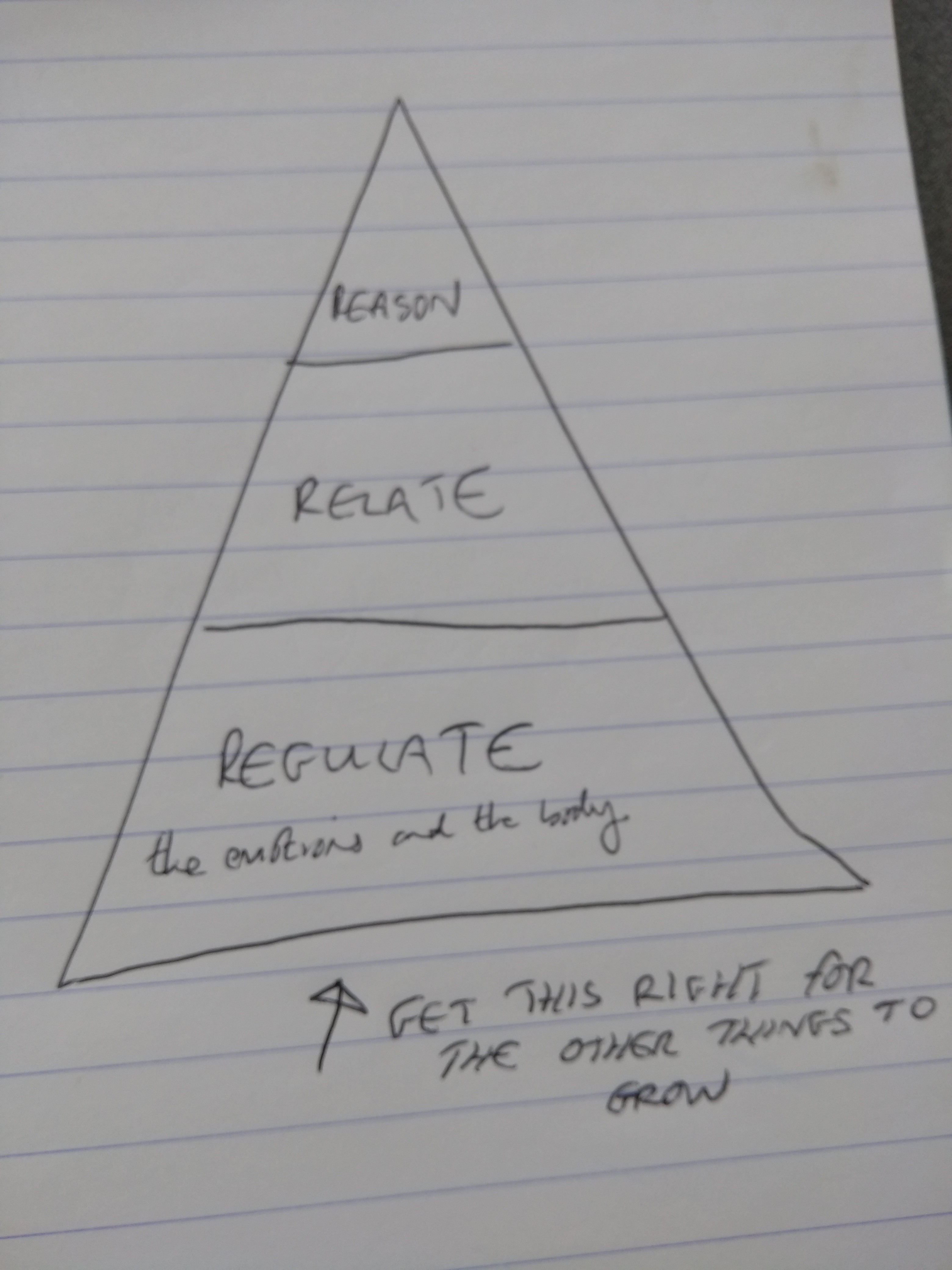
In normal development, during the first year of a child’s life the process of growing into yourself on a bodily level is pretty all consuming – with language etc. taking a back seat at this stage. Getting this regulation base well developed is foundational to everything else that follows.
This means that looking at a child’s movement and how they hold themselves give some really good clues as to what was lacking when those early building blocks should have been getting put into place. How our children stand, sit, hold cutlery, come down stairs, eat can have important stories to tell. Stories that need to be listened to before jumping into addressing the wrong problem with the wrong type of therapy. For example, by taking a look at these bodily clues a child referred for anger management was able to build up his regulation rather than be bombarded with therapies to do with reason and relating.
For anyone who has suffered sustained trauma being present in the moment (particularly moments that trigger memories of the trauma) is really hard. All their senses are trained to one thing – threat. They are stuck in a very basic loop and everything else is shut down / blocked out. At the point of trauma it is of course really useful to be able to shut down all but the most necessary systems – however after this, for normal life to go on, for good development and relationship building etc it is just as important to be able to re-access these systems. To experience, be fully ‘in’ the whole of the moment they are actually in now with all their senses, and their whole bodies. As Sarah says: “The limbic system is key! If children are functioning in a flight or fight mode they are not going to be absorbing new experiences in a way that allows them to store them so they can have access to them when they are under stress.” See The Brain – Limbic Systems below.
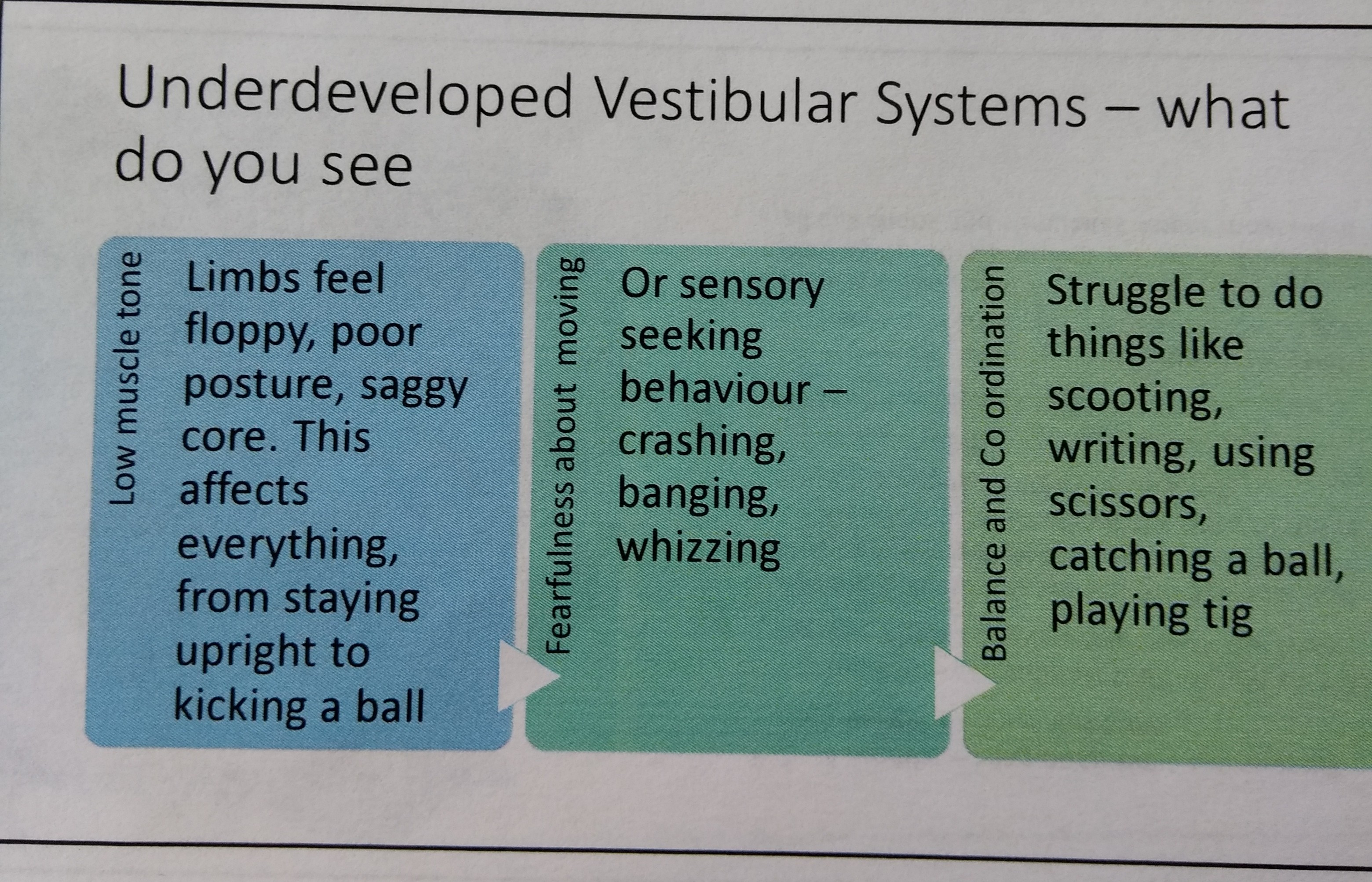
The Vestibular System: This system is like the stable base of a crane. it is not our though – but our head neck, shoulder girdle, and trunk. Well developed it gives us Gravitational Security (feeling sure of where we are compared to the ground) and Core Stability. The more movement experiences the body has from head to foot the better.
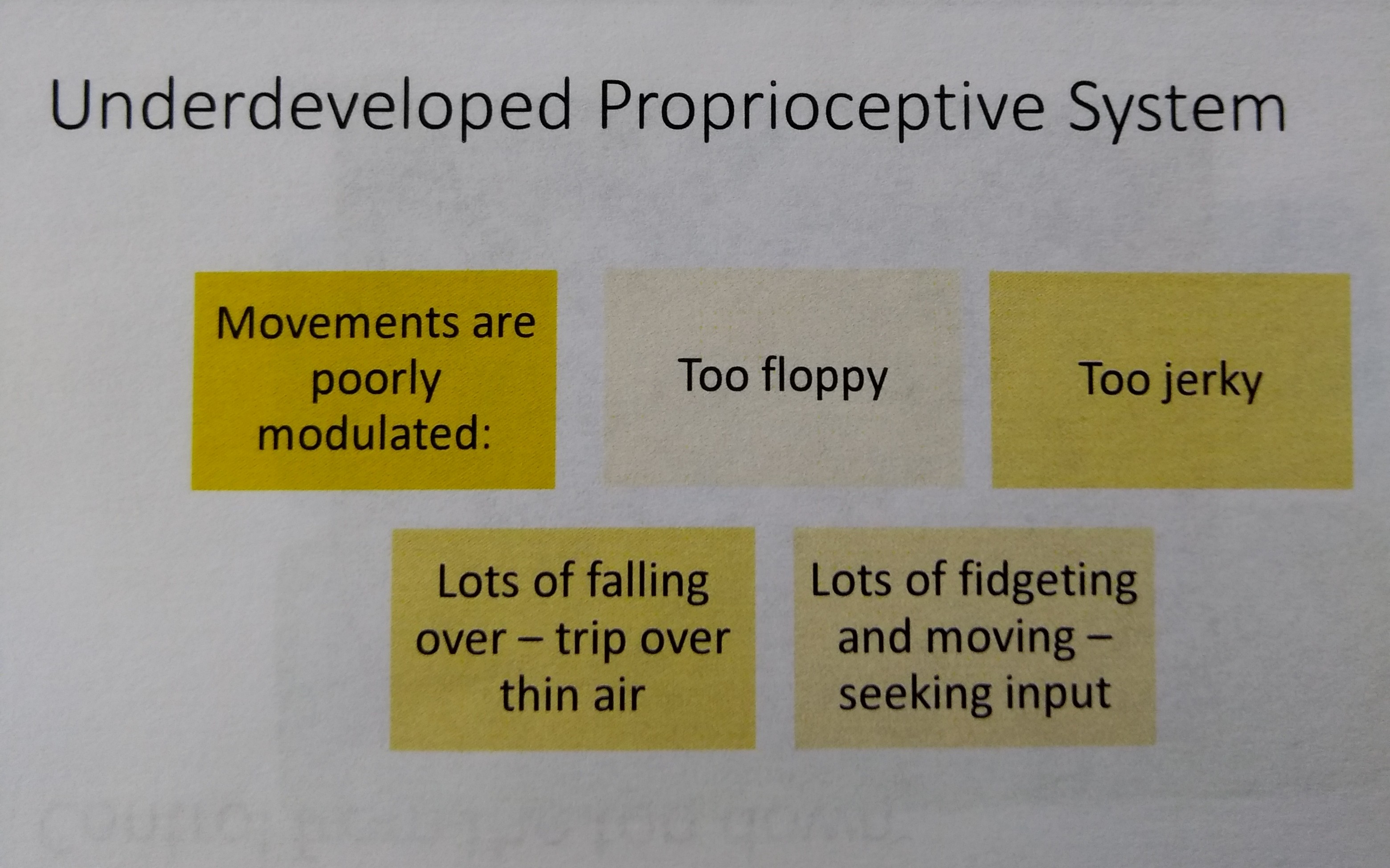
The Proprioceptive System: This system is the arm of the crane. It is to do with sensations and feedback from within the body – messages travelling from the muscles to the brain and back to ascertain how much pressure, force etc. to use. Working well there is good integration between the left and right sides, upper body and lower body…
If those technical terms are a bit much for you the good news is that it works its way out in practice in very simple ways. For example in the wonders of tummy time and crawling which between themselves just tick so many boxes. Tummy time (as opposed to cross legged circle time) doesn’t rely on, but helps build core strength. Gives you lots of feedback as to where you are in space. Crawling: as they uncurl their fists and get all sorts of feedback from the ground, as they get left and right side integrated in motion… While the children coming to see Sarah had learnt to walk and sit and come down stairs it was really important to go back to those missing building blocks of early tummy time and crawling without which their vestibular and proprioceptive systems have not had a chance to properly develop.
Tactile systems: This system is all about messages from outside the body. (Recommendation: David Linden TED talk) At birth our tactile systems are all about survival. There are loads of receptors at work with the sole job of of protecting and helping baby survive. If the baby then receives plenty of experiences where they face a need and it is met and explained and worked through with a caring adult the survival receptors recede allowing a discriminating, exploratory function to develop. Without that sense of safety and that repeated pattern of need / fear and then reward those receptors will only ever stay in protective mode – making it very hard to face all the new tastes and sensations the world throws at us all the time.
There is a need to re-calibrate the limbic system by “working on the protective arm of the tactile system – building associations between ‘mouthly activities’ and pleasure…”
Tactile therapy is the best place to start as it is a great way to get children out of the basic survival loop and into the details of the moment right now. It can be lots of fun and easily adapted to be do-able. It can be used in initial sessions to establish a base line of where things are and then to see progress.
Ideas for activities to develop these various systems
Vestibular and Proprioceptive: Commando crawling, stepping stones, tight rope along the floor; use of exercise balls as watching telly.
Tactile: taste tests – do these two crisps taste the same or different? If that is too hard – which of these is a banana and which is a carrot? If not ready to discriminate may need to grow oral strength – blowing various size balls with a straw. Bubbles in a glass. Sucking up yogurt through a straw. Use of feely bags, writing on backs with your finger, or massaging hands with a roller ball…
Helpful Hint: Activities that stimulate the proprioceptive system are CALMING: carrying something heavy, pushing something big, press ups, wall squats, lying on their tummies, sucking something thick through a straw….

 Adoption - Knitting Lives Together