
Attachment Workshop – Alison Burgess and Jennifer Cooper
We had a great day yesterday (July 2019!) at the above workshop – the only negative was that there simply wasn’t time to fit everything in. Helpfully we were sent lots of reading to do beforehand, so even though we didn’t address, for example, Resilience as much as Alison and Jennifer would have like to, we do have the information to work through. In terms of attendees – there was a good mix of professionals, prospective adopters (both approved and still in the assessment stage) and ‘active’ adopters bringing specific issues with them.
The Attachment Workshop built on some of the basic foundations given in the earlier / Assessment Stage training days and served to bring together several strands in a way that was helpfully consolidating for me as a prospective adopter. Words and themes such as attunement, modulation, the importance of names and special objects, PACE Therapeutic Parenting, inner working models etc. were all helpfully revisited and further developed into an ever clearer more integrated picture.
In addition to revisiting and building on some familiar ideas – a couple of newer concepts also came up for me: Affect and NVR and Coherant Life Narrative…..
Affect: What we experience emotionally has an effect on us which we as the caregivers need to be aware of and manage. It will affect our physical feelings, our psychological feelings and our facial expressions. When we are less successful at managing affect it is also a chance to admit this to our children and model regulation – to name the emotions we were feeling and if necessary to apologise for the way it then effected them.
NVR: Non-Violent Resistance. This is not simply refraining from physical discipline, but rather it invites us to completely re-position ourselves in relation to our response to unwelcome behaviour. Quoting from the following link: “Within a family setting Non Violent Resistance focuses on developing strong relationships between the parent(s) and child. It does not try to change the child through consequences or rewards, but uses ‘parental presence’ as an alternative.” https://sarahpfisher.com/what-is-non-violent-resistance. See also my Book Review on Connective Parenting by Sarah Fisher – post date 25th September 2019.
Coherent Life Narrative: This tied into my reading in Connecting with Kids through Stories – see Book Review post date 20th September 2019. But whereas the emphasis there was on the therapeutic use of stories in shifting inner working models, here it was more about being totally committed to helping your child develop as coherent a picture of their whole lives as possible. Having a coherent life narrative is a massive factor in resilience – the ability to bounce forward from adversity. And so we need to work hard to enable our children to have a narrative that answers questions truthfully and in a way they can understand. Questions about who they are and what happened to them and for that story to be open and accessible and valued. Not open for all and sundry to flick through like a coffee table book, but not hidden away on a top shelf somewhere in hope they will forget it either. Keeping and sharing the stories behind our children’s names are an important chapter in this story.
Different Types of Attachment: We looked at (and the reading we were sent covered) the various types of attachment which will soon start to become familiar terms to you – even if differentiating between the finer distinctions remains a bit of a mystery! Basically 95% of children experience healthy attachment – whether securely (60%) or insecurely – ambivalent or avoidant (35%). The remaining 5% are classed as having RAD – Reactive Attachment Disorder. For those suffering from RAD feeling in control is paramount as the only person they can trust is themselves. This means that it feels safer to reject and sabotage safe / loving / positive parenting (such as being praised) than to receive it and feel out of control.
Building Blocks: Good attachment is built with a series of building blocks. If these have been disrupted early on the whole structure will struggle. The neural pathways and connections associated with secure attachment may not have developed and in their place negative pathways will have sprung up and life becomes a minefield of false threat triggers. Within the safety of a secure attachment babies soon start to move beyond their basic protective reaction to the unknown and startling. A secure attachment gives us the space to learn to receive and sift through the multitude of noises, smells, textures, sights etc. that constantly bombard us and ‘dismiss’ them as non-threatening without even registering that we are doing it. Where attachment has been disrupted that sifting process has not had the chance to develop and the instinct to protect remains dominant leaving little room for exploration and stifling the brain’s ability to file things under S for SAFE.
The good news is that new pathways can be forged – but….. it takes a lot of repetition and time!
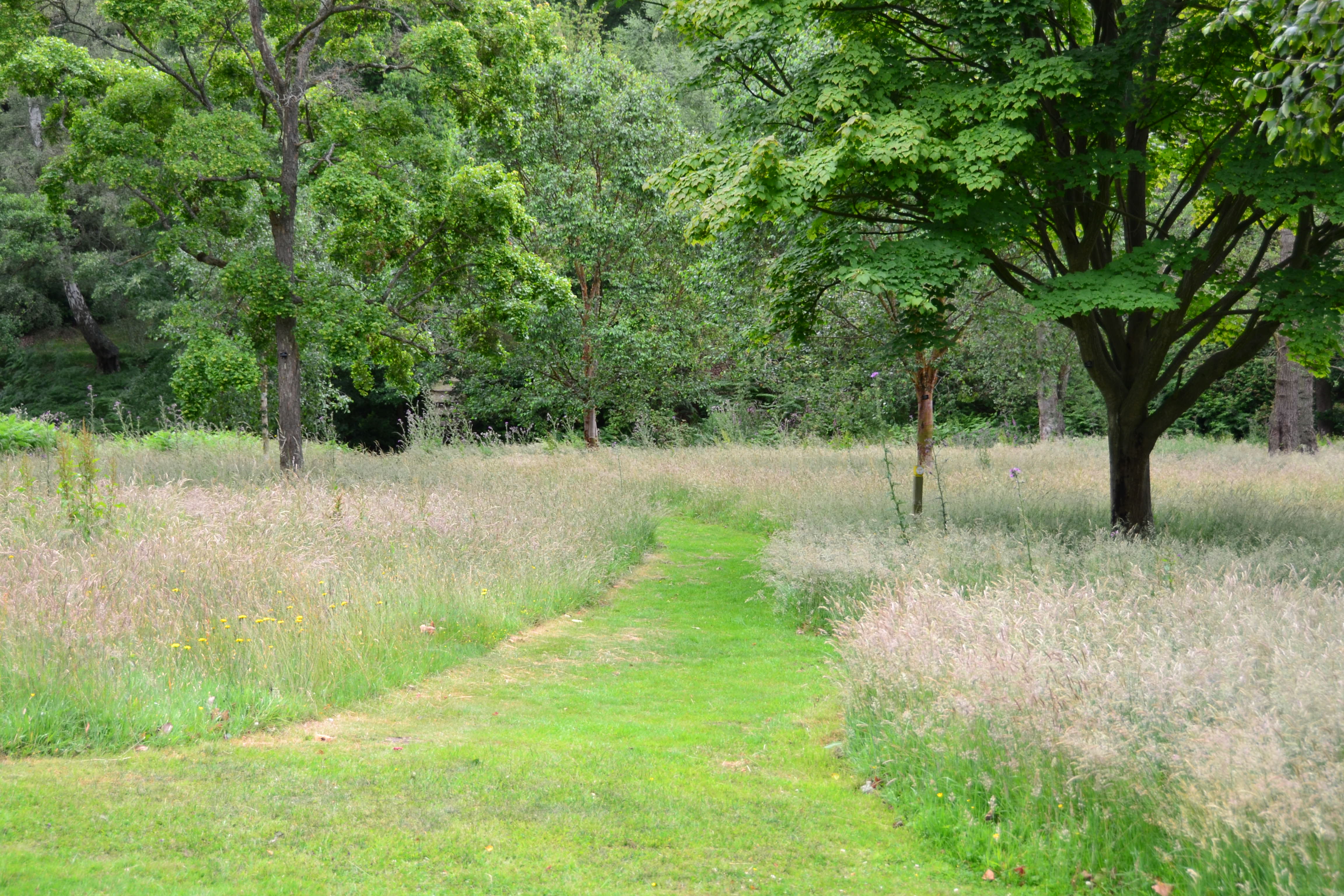
Imagine an overgrown field with a well worn path through it. Well worn because you have travelled it every day of your life – again and again.
Now imagine that it turns out to be the wrong path! You can’t just reverse the situation overnight. New ‘paths’ need to be travelled again and again to open them up and the old ones left neglected and disused. Easier said than done – it’s hard going making new paths and it feels very ‘unnatural’. Those old pathways have a massive ‘home advantage’ and helping our child to re-train their auto pilot is a long term undertaking.

But just knowing about this dynamic can transform our parenting right now. It teaches us to look under whatever behaviour has grabbed our attention (the tip of the iceberg) and identify if our child is experiencing a fight or flight or freeze reaction and if so what triggered* it. We are then going to parent them appropriately – looking after our frightened child rather than disciplining our naughty child. We can name the feelings they are experiencing and help them to self-regulate – all the while treading those new pathways together.
*Where attachment has been disrupted there will be lots of false triggers that turn a seemingly non-threatening thing into something terrifying.
Some parenting styles to avoid: The Kangaroo – over protective / The Jellyfish – tired, touchy and hypersensitive / The Ostrich – head in the sand / The Rhino – charges in and others to aim for…. The St Bernard – there with sustenance, a solid presence / The Dolphin – who depending on the circumstances dolphins will swim ahead of, beside or behind their young.
A couple more recommendations to chase up: Dr Hazel Harrison – Upstairs and Downstairs Brains / Holly Van Gulden – using the language of ‘PARTS‘ / Treating Traumatic Stress in Children and Adolescents / ACEs training – Nigel Holme

 Adoption - Knitting Lives Together